 How-to
Printing Logos on Matte Finish Promotional Pens
Last Updated: November 17, 2026
Quick Summary
Yes, you can print logos on matte finish promotional pens, and the matte surface actually helps the logo stay readable because it scatters light instead of reflecting it. The main challenge is adhesion, since matte coatings can resist ink, so the imprint method, surface preparation and ink must be matched to the specific coating. Pad printing with flexible ink, screen printing, UV printing and laser engraving are the methods used depending on barrel material.
- Matte barrels scatter light instead of reflecting it, so an imprint reads cleanly from across a trade show aisle.
- Pad printing works best on matte surfaces with properly cured ink and a barrel cleaned of mold release agents before printing.
- Laser engraving produces a permanent mark on bare metal matte pens but can leave a rough edge on coated plastic.
- Vector artwork such as EPS, AI or PDF with outlined fonts is generally preferred over raster files for imprinting.
- Run a thumb rub, fingernail scratch, cross-hatch, pocket cycle, sunlight and solvent wipe test on a physical sample before bulk ordering.
Table of Contents
- Why Matte Finish Promotional Pens Take Ink Differently
- Custom Pen Imprint Methods That Work on Matte Barrels
- Matching the Imprint Method to Barrel Material and Coating
- Logo File Requirements for Custom Pens
- Designing Custom Pens With Color Logo on a Small Imprint Area
- Testing Adhesion and Durability Before You Order Pens With Logo in Bulk
- Requesting a Matte Pen Sample and Quote From BicClic.com
- Frequently Asked Questions
Why Matte Finish Promotional Pens Take Ink Differently
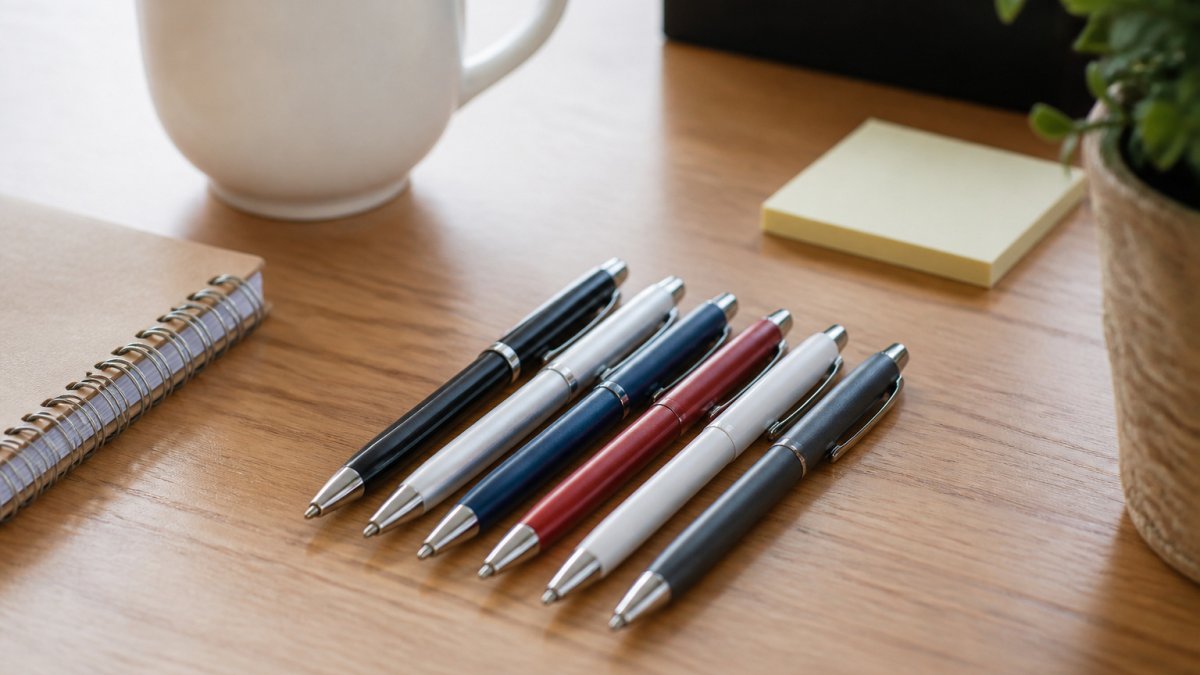
Yes, you can print logos on matte finish promotional pens, and the finish actually helps the logo stay readable. Matte barrels scatter light instead of reflecting it, so an imprint reads cleanly from across a trade show aisle. The catch is adhesion. A matte surface is a coating, not bare plastic, and ink bonds to coatings differently than it bonds to a gloss barrel.
This guide covers what actually sticks, what peels, and how to spec a matte pen order without surprises.
Here is the core tension: matte finishes look premium and photograph well, but the same texture that kills glare can also resist ink. Get the method right and matte finish promotional pens outperform gloss on perceived quality. Get it wrong and the logo rubs off in a prospect's pocket.
Custom Pen Imprint Methods That Work on Matte Barrels
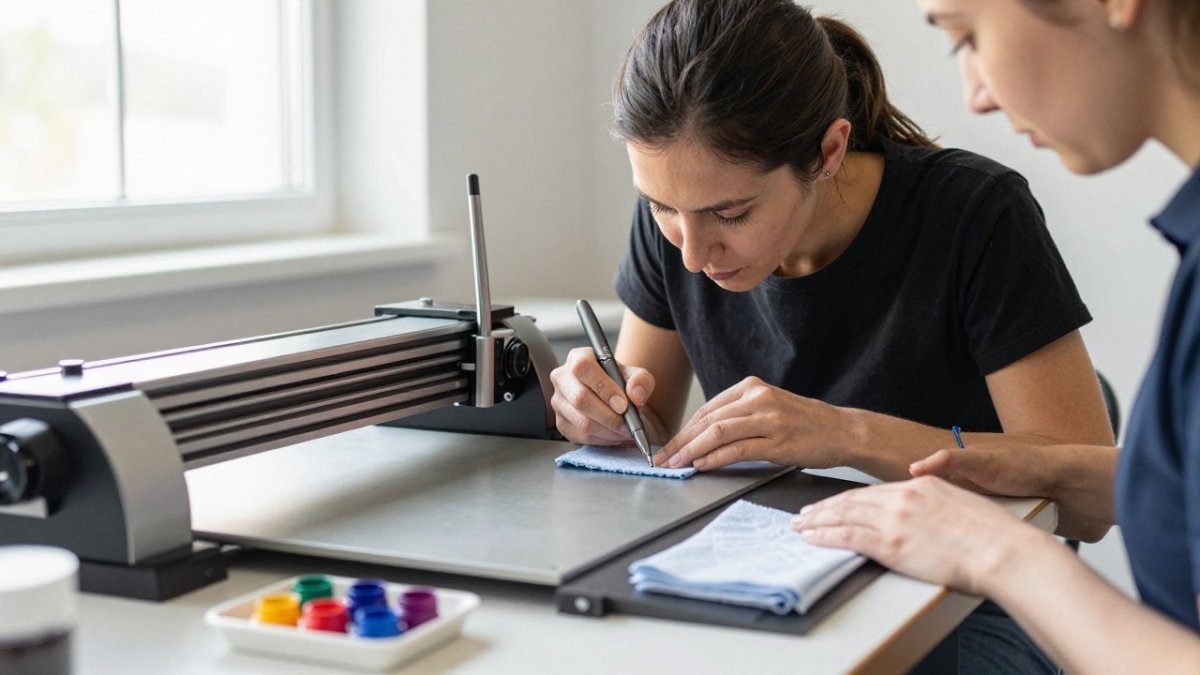
Several methods are used for custom pen imprint work. Laser engraving, for example, only works on specific materials.
The woman is American.
Pad Printing for Curved, Soft-Touch Barrels
Pad printing is commonly used for curved pen barrels. A silicone pad picks up ink from an etched plate and presses it onto the barrel, conforming to the curve without distorting the artwork.
The method handles one-color and two-color imprints. On matte surfaces, pad printing generally works best with a properly cured ink and a barrel that has been cleaned of mold release agents before printing.
Screen Printing, UV Printing, and Laser Engraving
Laser engraving removes material rather than adding ink. On bare metal matte pens, it produces a permanent mark that cannot peel. On coated plastic, laser engraving cuts through the coating and can leave a rough edge, so confirm material compatibility before you commit.
Matching the Imprint Method to Barrel Material and Coating
Method selection follows material first, coating second, and matte coatings add a third variable most guides ignore: surface energy. Ink bonds to a barrel when the coating's surface energy is high enough for the ink to wet out and anchor. Matte and soft-touch coatings are formulated with matting agents, fine silica or wax particles that scatter light and create the low-glare look. Those same particles sit at the surface and can lower surface energy, which is why an ink that grips a gloss barrel can bead or flake on a matte one. The practical fix is not a different method so much as surface preparation and ink selection matched to the coating.
The woman is American.
Why Matte Coatings Resist Ink
Matte adhesion failures generally come from a few mechanisms. Mold release agents and silicone residues left on the barrel from manufacturing can sit between the coating and the ink, and a solvent wipe before printing removes them. Matting agents can create a rough, low-surface-energy surface that may not suit inks formulated for gloss plastic. Soft-touch coatings are often more flexible than hard matte coatings, so a rigid ink can crack when the barrel flexes.
Decision Guide by Barrel Material and Coating
| Barrel Material and Finish | Best Imprint Method | Why It Works on Matte | Watch For |
|---|---|---|---|
| Matte plastic, soft-touch coating | Pad printing with flexible ink | Pad conforms to curve; flexible ink moves with coating | Mold release residue; under-cured ink flakes at edges |
| Matte plastic, hard coating, bold solid logo | Screen printing | Thick opaque ink covers matte texture evenly | Fine detail fills in; ink must be coating-matched |
| Matte plastic, multi-color or gradient logo | UV printing | Instant cure, full-color, sharp edges | Confirm coating compatibility; UV ink can chip on flex |
| Matte metal, bare finish | Laser engraving | Permanent mark, no ink to peel | Cannot be removed; heat-affected zone can dull finish |
| Matte metal, painted | Pad printing or UV | Ink sits on paint layer | Paint adhesion is the weak link, test the sample |
| Matte gel or stylus barrel | Pad printing | Handles compound curves | Avoid heavy ink buildup near clip and grip |
| Matte recycled or plant-based plastic | Pad printing or UV after treatment | Treatment raises surface energy | Surface energy varies by batch, test each lot |
Watch out: a printer who quotes a matte pen job without asking about the specific coating is guessing. Coating chemistry varies by supplier and batch, so the method that worked on last year's matte barrel may fail on this year's.
Logo File Requirements for Custom Pens
Logo file requirements for custom pens are stricter than most buyers expect. The imprint area on a pen barrel is small, often under an inch wide, and every method loses some detail at that scale.
Vector artwork is generally preferred over raster files for imprinting. An EPS, AI, or PDF file with outlined fonts gives the printer clean edges to work from.
Color matching on matte is a common consideration. Ink printed on a matte coating can dry slightly duller than the same ink on gloss, so a brand color can read a shade darker. Requesting a physical proof rather than approving from a screen is a sensible precaution.
Designing Custom Pens With Color Logo on a Small Imprint Area
Custom pens with a color logo need a design that survives reduction. A logo that looks sharp on a website can turn to mush at half an inch wide.
Simplify before you shrink. Drop taglines, reduce the mark to its core shapes, and increase spacing between elements. Readability beats fidelity every time on a pen barrel.
For small or curved imprint areas, follow these rules:
- One idea per imprint, not three
- Minimum line weight that holds at final size
- High contrast between ink and barrel color
- Contact details only if space genuinely allows
A common mistake is cramming a phone number and website onto a barrel that fits a logo and nothing else. Pick the mark. The pen does the brand exposure work, not the fine print.
Testing Adhesion and Durability Before You Order Pens With Logo in Bulk
Ordering a sample before committing to pens with logo in bulk is a sensible step, since it can help avoid a reprint. For a broader look at how to ensure promotional product quality, read our full guide. Most buyers stop at "does it look right?", the tests below tell you whether it will still look right after a month in a pocket.
A Practical Adhesion Test Protocol
Run these checks on the physical sample, in this order, and record results against the approved proof:
- Thumb rub: press firmly and rub the imprint for ten seconds. Pass if no ink transfers to your thumb and the logo edges stay crisp. Fail if you see smearing, ghosting, or a dull patch.
- Fingernail scratch: drag a fingernail across the logo edge at a shallow angle. Pass if the ink resists and the edge holds. Fail if ink lifts in flakes or curls at the border, a sign of under-curing or mold release residue.
- Cross-hatch check: score a small grid through the imprint with a hobby knife, press tape over it, and peel. Pass if little ink lifts. Fail if the grid lifts cleanly, the ink never bonded to the coating.
- Pocket cycle: clip and unclip the pen to a pocket or bag edge 20 times. Pass if the imprint shows no scuffing at the clip contact point. Fail if the logo wears where the clip rubs.
- Sunlight exposure: leave the sample on a windowsill for several days and compare against the proof. Pass if color holds. Fail if the ink shifts, chalks, or fades faster than the barrel.
- Solvent wipe: rub the imprint with an alcohol wipe. Pass if the logo holds. Fail if it smears, a common issue on soft-touch coatings with incompatible ink.
Diagnosing Common Matte Print Defects
When a sample fails, the defect usually points to a specific cause. Poor adhesion that lifts at the edges is almost always surface contamination or under-curing. Uneven coverage or a mottled look comes from ink that did not wet out on a low-surface-energy coating. Color shift, the logo reading darker or duller than the proof, is normal to a degree on matte because the coating absorbs light differently than gloss, but a large shift suggests the wrong ink or an off-pantone match. Scuffing at the clip or grip means the ink is too brittle for a flexible coating. Bring the failed sample back to the printer with the specific test that failed; that narrows the fix to prep, ink, or cure rather than a wholesale method change.
Production Constraints and Order Economics
Method and color count drive cost and lead time more than barrel price does. Method and color count generally drive cost and lead time more than barrel price does. Each additional color typically adds setup and production time, and minimum order quantities vary by method and supplier, so ask for the MOQ alongside the quote rather than assuming it.
Matte coatings change how ink reads, so a printed sample on the exact barrel before a bulk run is a sensible precaution.
Requesting a Matte Pen Sample and Quote From BicClic.com
The fastest way to settle a matte pen question is to hold one in your hand. BicClic.com supplies genuine Bic brand pens and custom imprinted promotional items.
For a quote, prepare your logo file, your preferred matte barrel, and your deadline. Pricing depends on quantity, dates, and delivery, so visit BicClic.com for current prices or a quote.
Matte finish promotional pens reward buyers who test before they scale. Request a sample and a quote, check the imprint yourself, then place the bulk order with confidence.
Matte pens only pay off when the logo survives daily use, and that starts with the right imprint method and a real sample in your hand. BicClic.com brings over 14 years of custom imprinted promotional product experience, genuine Bic brand pens, and cost-effective options built for trade shows, client gifts, and employee recognition. Send us your artwork and deadline, and we will confirm the method and quote before anything goes to print. Get started with BicClic.com and put a logo on a matte barrel that still looks sharp months later.
Frequently Asked Questions
Can you print a logo on a matte-finish promotional pen?
Yes. Matte barrels can take logos, but the method matters. The right pick depends on barrel material, logo complexity, and how much wear the pen will see.
Which printing method works best on matte promotional pens?
Ask your supplier to confirm the imprint method against your specific barrel coating, since a soft-touch finish can reject ink that bonds fine to a hard matte surface.
What logo file requirements do custom pens need?
Vector artwork is generally preferred so the imprint stays sharp at small sizes. Including Pantone or CMYK color values for matching and converting text to outlines are commonly recommended steps.
How do I make sure the logo stays on a matte pen after heavy use?
Requesting a physical sample with your logo imprinted before committing to a bulk run is a sensible step. Rubbing, scratching and wiping the sample are common ways to check adhesion.