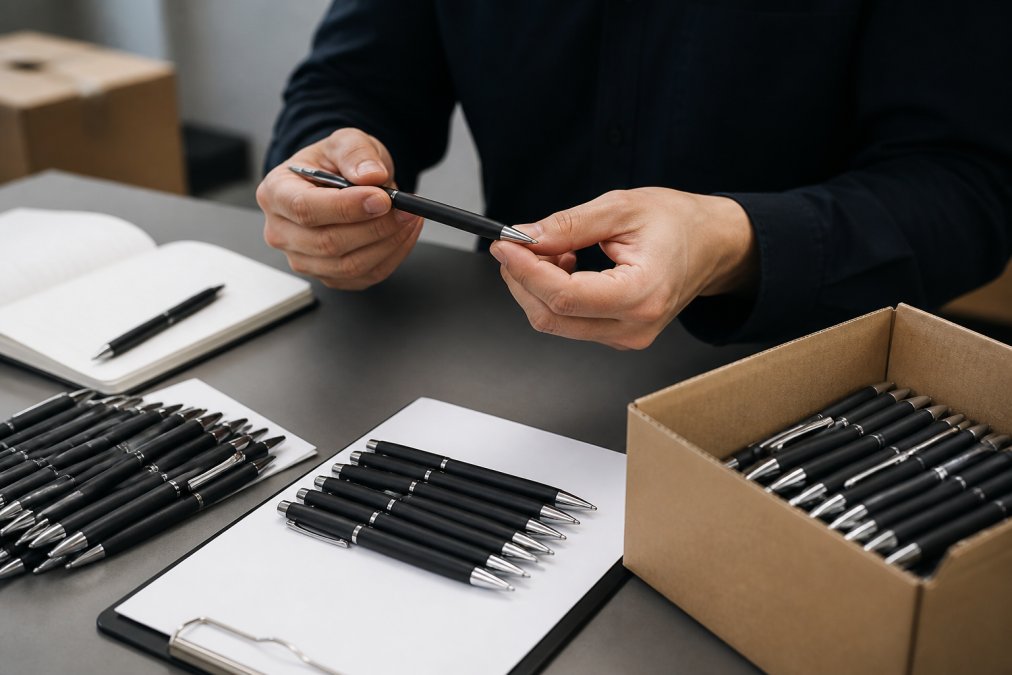
 how-to
How to Ensure Promotional Product Quality
Table of Contents
- Why Promotional Product Quality Matters to Your Brand
- Step 1: Vet Suppliers and Evaluate Brand Alignment
- Step 2: Request and Inspect Promotional Product Samples
- Step 3: Create a Promotional Product Quality Control Checklist
- Step 4: Verify Compliance and Safety Regulations
- Step 5: Measure ROI and Campaign Effectiveness
- Finding a BicClic Alternative for Bulk Office Orders
- Common Mistakes to Avoid When Sourcing Promotional Products
- Frequently Asked Questions
Last Updated: September 20, 2026
Why Promotional Product Quality Matters to Your Brand
Your brand impression doesn't end when you hand over a promotional item. It continues every time someone uses it, loses it, or throws it away. A cheap pen that breaks after two weeks sends a message about your company. A quality pen that works for months sends a different one entirely.
Promotional product quality directly affects how prospects and customers perceive your business. When you distribute low-quality items, people associate that poor quality with your brand. When you distribute items that actually work and last, people remember your company positively. This connection between product quality and brand perception is why sourcing matters so much.
The stakes are highest at trade shows, client appreciation events, and employee recognition programs. These are moments when your brand gets physical contact with decision-makers. A quality item creates goodwill. A poor item creates doubt.
BicClic.com has spent over 14 years helping businesses navigate this exact challenge. The company specializes in custom imprinted promotional products, particularly genuine Bic pens and branded office items that maintain quality standards. This guide walks you through the five essential steps to ensure the promotional products you source reflect your brand accurately and perform reliably.
Step 1: Vet Suppliers and Evaluate Brand Alignment
Start by identifying suppliers who understand your brand identity. Not every promotional product vendor works the same way. Some prioritize cost above all else. Others balance cost with quality control. Your job is finding suppliers in the second camp.
When vetting a supplier, ask these specific questions:
- Do they carry products from established brands (like genuine Bic pens)?
- What is their quality control process?
- How long have they been in business?
- Can they provide references from companies similar to yours?
- What is their lead time for custom orders?
Brand alignment means the supplier's product selection and quality standards match what your company needs. If your brand positions itself as premium, a supplier focused exclusively on the cheapest options won't serve you well. Conversely, if you're a startup on a tight budget, you need a supplier who understands cost constraints without sacrificing durability.
Ask potential suppliers about their supply chain transparency. Where do products come from? Are materials sourced responsibly? Do they test products before shipping? These questions reveal whether a supplier takes quality seriously or just moves inventory.
Step 2: Request and Inspect Promotional Product Samples
Never order in bulk without testing samples first. This is the most important step in ensuring promotional product quality. Samples reveal problems that conversations with suppliers cannot.
When you request samples, ask for items that match your exact specifications: your logo, your colors, your imprint method. A generic sample looks different from a customized one. Generic samples won't show you print quality issues or color accuracy problems that appear on your actual order.
Inspect samples for these specific details:
- Print clarity: Is the logo sharp or blurry? Are colors accurate?
- Material feel: Does the pen write smoothly? Does the plastic feel durable?
- Imprint placement: Is the logo positioned where you specified?
- Packaging: Is the item packaged in a way that protects it during shipment?
Test the product yourself. Write with a pen. Use a USB drive. Wear a t-shirt. Don't just look at samples. Use them like a real customer would. This reveals durability issues immediately.
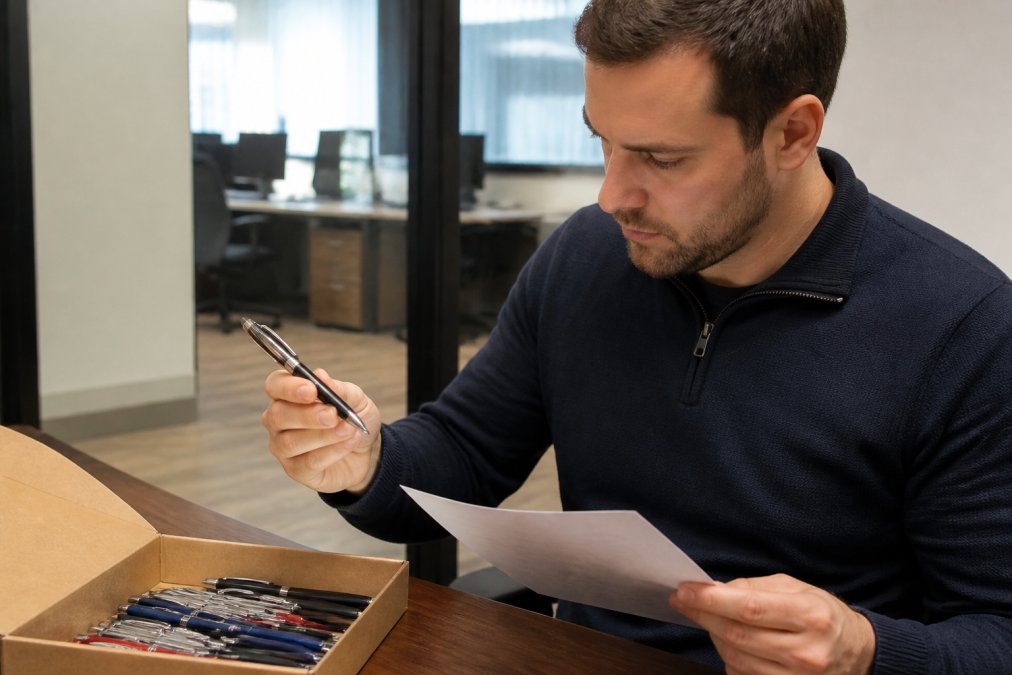
Document any issues you find. Take photos. Write notes. Share feedback with the supplier and ask how they'll address problems. A good supplier responds quickly and makes corrections. A poor supplier dismisses your concerns or makes excuses.
Step 3: Create a Promotional Product Quality Control Checklist
A quality control checklist standardizes your inspection process. It ensures every batch meets the same standards. Without a checklist, inspection becomes inconsistent and subjective.
Your promotional product quality control checklist should cover three main areas: material durability, print quality, and compliance standards. Each area has specific measurable criteria.
Material durability and product inspection
Durability determines whether your promotional item gets used or discarded. Test materials under realistic conditions.
For pens, check:
- Ink flow consistency from first use to final use
- Cap retention (does it stay on when clipped to a pocket?)
- Barrel durability (does it crack or dent easily?)
- Refill availability (can customers replace ink?)
For other items like drinkware or USB drives, test the materials that will experience the most wear. Drop a mug from counter height. Does it chip? Flex a USB connector. Does it break?
Create a simple durability test for each product type. Document results. If items fail, they don't ship. This protects your brand reputation.
Print quality and design specifications
Print quality makes or breaks the visual impact of your promotional item. Poor printing wastes the entire investment.
Verify these specifications for every batch:
- Logo color matches your brand standards (use color matching if possible)
- Text is legible at actual size
- No smudging or bleeding of ink
- Imprint placement matches your design file exactly
- No missing elements from your design
Request that your supplier provide vector files (EPS or PDF format) for your logo (What is a Vector File & How to Use & Create Them). Vector files scale perfectly without losing quality. Raster files (JPG, PNG) can become pixelated when enlarged (Raster vs. vector: What are the differences?).
Compliance and safety standards
Compliance requirements vary by product type and industry. You must verify that all items meet relevant safety standards before distribution.
- Consumer Product Safety Commission (CPSC) regulations for your specific product type
- Flammability standards for textiles
- Lead and phthalate restrictions for children's items
- Labeling requirements for hazardous materials
Step 4: Verify Compliance and Safety Regulations
Beyond the supplier's documentation, conduct your own verification. This protects your company and your customers.
- Product category and relevant regulations
- Required test certifications
- Documentation you need from the supplier
- Your internal verification steps
Step 5: Measure ROI and Campaign Effectiveness
Promotional product quality affects whether your campaign delivers results. Poor quality items get discarded. Quality items get used and remembered.
To measure ROI, track these metrics:
- Impression count: How many people receive the item?
- Usage rate: How many people actually use it?
- Brand recall: Do recipients remember your company name?
- Lead generation: Did the item drive inquiries or sales?
Finding a BicClic Alternative for Bulk Office Orders
When sourcing bulk promotional products, you have options. BicClic.com specializes in custom imprinted pens and branded office items for businesses across North America. The company has over 14 years of experience and focuses on quality products that reinforce brand identity.
| Criteria | What to Look For | Why It Matters |
|---|---|---|
| Product quality | Genuine branded items, not knockoffs | Protects your brand reputation |
| Customization options | Logo placement, color matching, design flexibility | Ensures items align with your brand identity |
| Quality control | Lab testing, compliance documentation, sample approval | Reduces risk of distributing defective items |
| Lead time | Realistic timelines, rush options available | Meets your campaign deadlines |
| Customer service | Responsive support, references available, problem resolution | Protects your investment if issues arise |
| Pricing transparency | Clear quotes, no hidden fees, volume discounts | Allows accurate budgeting |
Common Mistakes to Avoid When Sourcing Promotional Products
Learning from others' mistakes saves time and money. Here are the most common errors businesses make when sourcing promotional products.
Frequently Asked Questions
How do you verify the quality of custom imprinted office supplies before ordering in bulk?
Request samples from your supplier and inspect them against a quality control checklist covering material durability, print clarity, color accuracy, and compliance markings. Test the samples for functionality, pens should write smoothly, clips should hold securely, and imprints should resist scratching and fading. Compare samples against your brand guidelines to ensure alignment. Ask your supplier about their lab testing procedures and request documentation of compliance certifications. This hands-on inspection prevents costly mistakes across large orders.
What safety and compliance standards should promotional products meet?
Promotional products must comply with Consumer Product Safety Commission (CPSC) regulations and relevant ASTM standards depending on the product type. Writing instruments require testing for toxicity and durability. Imprinted items must use non-toxic inks and adhesives. Verify that your supplier conducts third-party lab testing and maintains documentation of compliance. Request a Certificate of Compliance from your vendor before placing bulk orders. This protects your brand from liability and ensures your promotional items are safe for customer use and retention.
Why does promotional product quality impact ROI and campaign effectiveness?
High-quality promotional products are used and kept longer, extending brand exposure and impression tracking. Poor-quality items end up discarded, wasting your marketing budget and damaging brand perception. Quality products reinforce perceived value and brand identity, making recipients more likely to use them repeatedly and recommend your company. Measuring campaign effectiveness through retention rates and usage feedback shows that quality directly correlates with customer engagement and lead generation success. Investing in quality materials and production ensures your promotional investment delivers measurable returns.
How can I spot low-quality promotional merchandise before ordering in bulk?
Examine sample materials for uneven printing, color bleeding, weak stitching, or loose components. Check that imprints match your vector files and design specifications exactly. Test functionality, pens should write without skipping, clips should grip firmly, and moving parts should operate smoothly. Ask about material sourcing and lead times; rushed production often signals quality shortcuts. Review the supplier's merchandise audit procedures and ask for references from similar customers. Red flags include unusually low pricing, vague responses about testing procedures, and unwillingness to provide samples before bulk production.