 How-to
Premium Brand Image: Ensuring Promotional Items Reflect Your Brand
Table of Contents
- Why Promotional Items Matter for Brand Perception
- Building Brand Identity Through Cohesive Product Selection
- High-Quality Custom Imprinted Pens and Office Items as Brand Ambassadors
- Best Promotional Items for Small Business Marketing Success
- How to Choose Promotional Products for Brand Identity
- Visual Consistency and Logo Placement Across Your Promotional Strategy
- Premium Materials and Durability as Trust Builders
- Measuring Impact: How Promotional Items Drive Brand Loyalty and ROI
- Frequently Asked Questions
Last Updated: September 27, 2026
Why Promotional Items Matter for Brand Perception
Your brand lives in people's minds. It's not just your logo or website. It's every touchpoint where customers interact with you. Promotional items are one of the most underrated touchpoints, and promotional items reflect brand in ways that shape customer perception. A pen someone uses daily sits on their desk for months. A mug they drink from every morning becomes part of their routine. These items keep your brand visible in ways digital ads can't match.
The psychology is simple: repeated exposure builds familiarity. Familiarity builds trust. Trust drives purchasing decisions. When a prospect reaches for your branded pen to sign a contract, your brand is literally in their hand at a critical moment.
But here's what most businesses get wrong: they treat promotional items as cheap giveaways. They slap a logo on the lowest-cost item they can find and hope it sticks. The result? Those items end up in a drawer, forgotten within weeks. They cheapen the brand instead of strengthening it.
At BicClic.com, we've worked with businesses for over 14 years that understand how promotional items reflect brand through quality and intentional design. Premium promotional items that reflect brand image aren't an expense, they're an investment in brand perception. The quality of the item signals the quality of your business. Cheap items send the opposite message.
Building Brand Identity Through Cohesive Product Selection
Brand identity is the visual and emotional personality your business projects. It's consistency across every element: colors, fonts, messaging, and materials. Promotional items are an extension of that identity.
Cohesive product selection means choosing items that align with your brand positioning. A luxury financial firm shouldn't hand out plastic pens. A tech startup shouldn't use items that feel outdated. The product category, material quality, and design all communicate something about who you are.
Start by defining your brand personality. Is your brand professional and corporate? Creative and playful? Sustainable and conscious? Once you know that, select promotional items that reinforce it. Here's how to think about it:
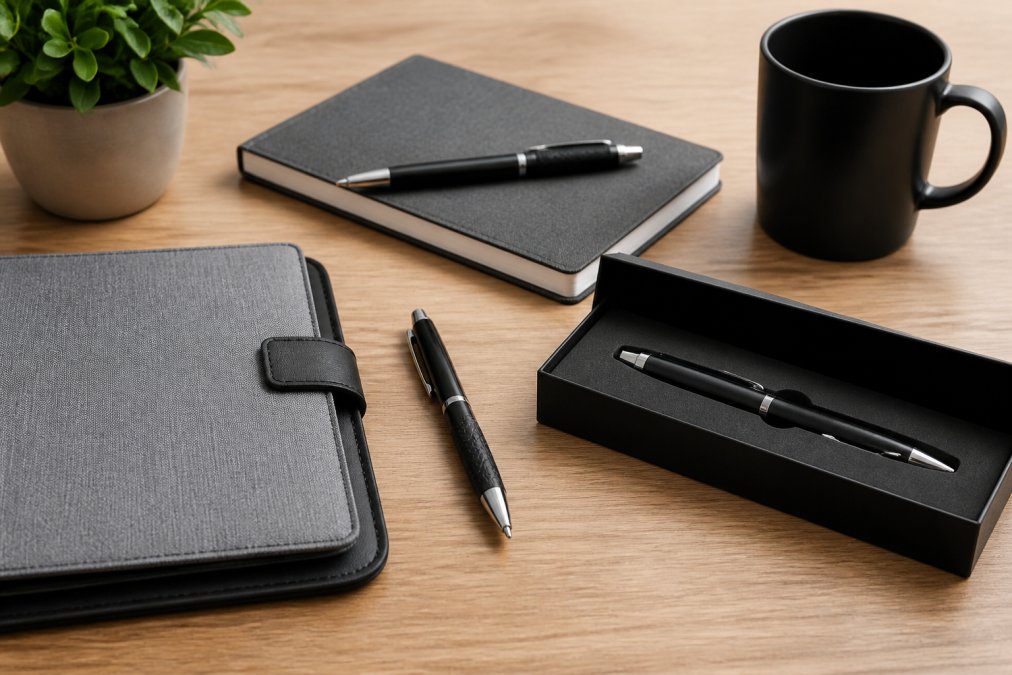
- Professional services firms: High-quality pens, leather portfolios, premium stationery
- Tech companies: Sleek tech accessories, modern drinkware, minimalist designs
- Nonprofits: Eco-friendly items, community-focused products, sustainable materials
- Hospitality: Branded glassware, quality linens, experiential items
The goal is congruence. Every item should feel like it belongs to your brand. When someone receives a promotional item from you, they should think, "This makes sense. This is exactly what I'd expect from them."
High-Quality Custom Imprinted Pens and Office Items as Brand Ambassadors
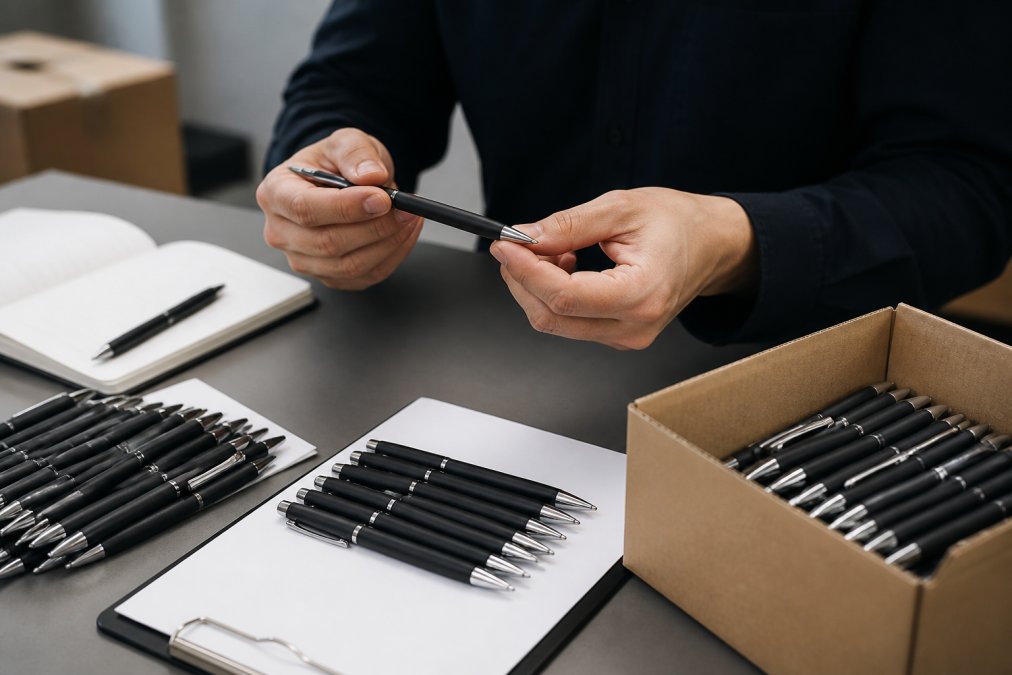
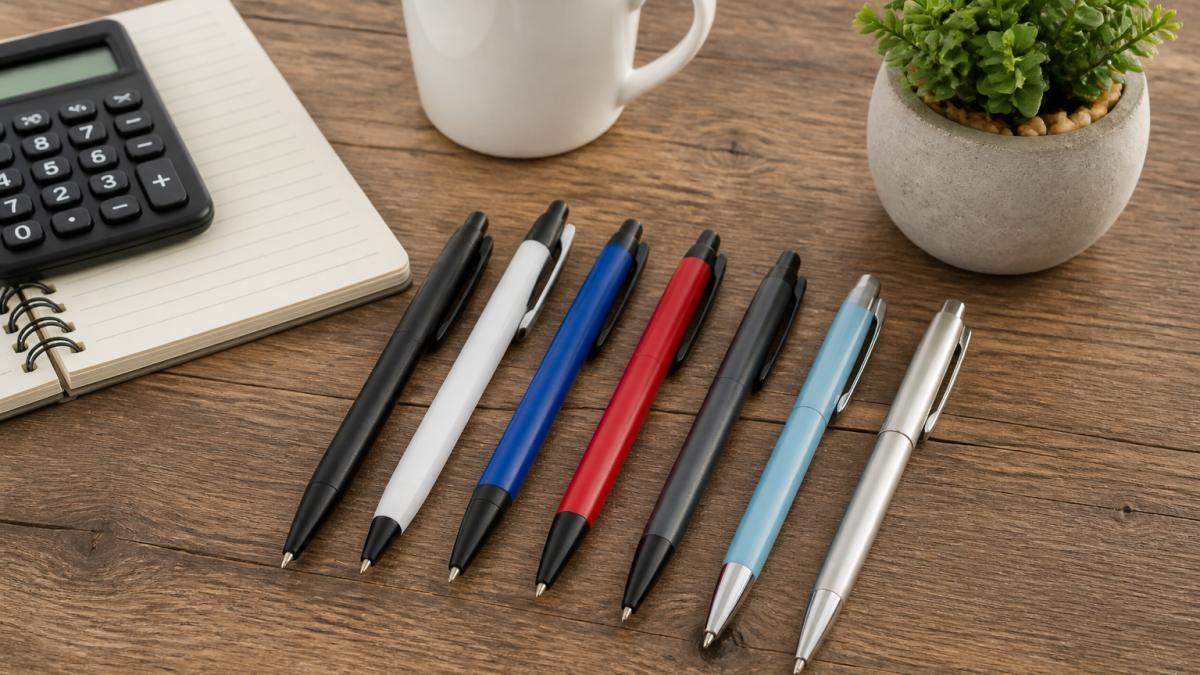
Custom imprinted pens are the workhorse of promotional marketing. They're practical, affordable at scale, and used frequently. But quality matters enormously. A cheap plastic pen breaks after a week. A quality pen lasts for months or years, keeping your brand visible the entire time.
Genuine Bic pens are engineered for reliability. They write smoothly, don't leak, and feel substantial in hand. When you customize them with your logo and brand colors, they become brand ambassadors that work on behalf of your business every single day.
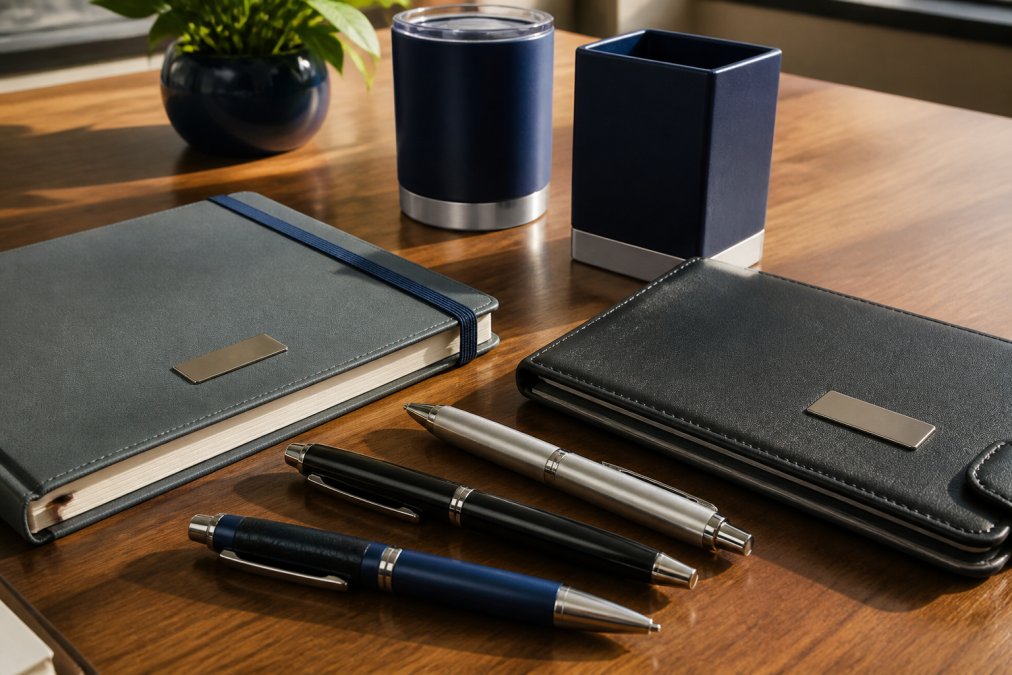
Office items extend beyond pens. Consider these options for different contexts:
- Desk sets: Pen holders, notepads, desk organizers with your logo
- Writing instruments: Ballpoint pens, gel pens, premium markers
- Stationery: Branded notepads, sticky notes, index cards
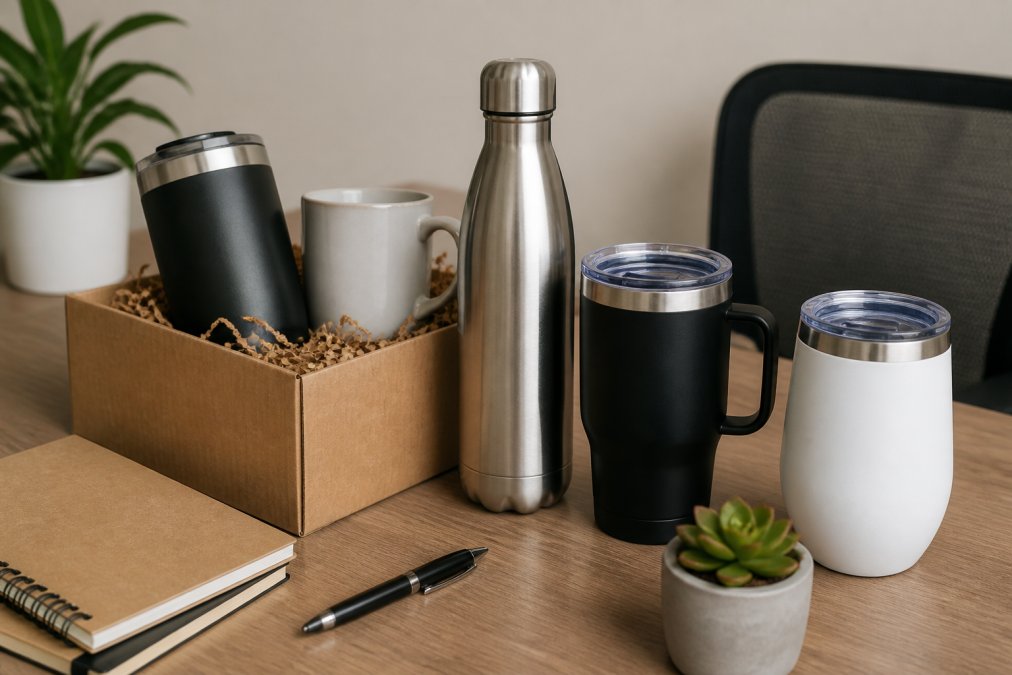
- Drinkware: Branded mugs, tumblers, water bottles for offices and trade shows
The key is utility. People keep items they use. A mug someone drinks from daily stays on their desk. A pen they reach for regularly becomes part of their workflow. Office items have built-in utility, they solve a problem people already have.
BicClic.com specializes in these exact products because they work. They're not flashy. They're not trendy. They're reliable tools that keep your brand present without being intrusive.
Best Promotional Items for Small Business Marketing Success
Small businesses face a real constraint: budget. You can't spend what Fortune 500 companies spend on brand building. But you can spend smarter.
The best promotional items for small business marketing share three qualities: they're affordable at scale, they're useful enough to keep, and they align with your brand positioning.
Here's what works:
- Pens: The ROI is strong. A quality pen costs a few dollars but stays visible for months.
- Notepads: Desk-bound items have high visibility. People see your logo every time they jot something down.
- Branded stationery: Envelopes, letterhead, business cards reinforce brand consistency in written communication.
- Drinkware: Coffee mugs and water bottles are used daily. They travel to offices, homes, and meetings.
- Tech accessories: Phone stands, charging cables, USB drives appeal to modern audiences.
The mistake small businesses make is spreading budget too thin. Ordering 5,000 different items in small quantities costs more per unit and dilutes your message. Better to order 2,000 of one high-quality item that people actually use.
How to Choose Promotional Products for Brand Identity
Choosing the right promotional products for brand identity requires a systematic approach. Don't just pick items you like. Pick items that serve your marketing goals and reinforce your brand positioning.
Step 1: Define your target audience. Who receives these items? Existing customers? Prospects at trade shows? Employees? Your audience determines what items make sense. Corporate clients expect professional items. Creative industries might appreciate more unique pieces.
Step 2: Assess your brand positioning. How do you want to be perceived? Premium or accessible? Modern or traditional? Playful or serious? Your brand positioning narrows down which product categories fit.
Step 3: Evaluate utility and durability. Will people actually use this item? Will it last long enough to keep your brand visible for months? A pen that breaks after two weeks is worthless. A pen someone uses daily for six months is invaluable.
Step 4: Consider logo placement and visibility. Where does your logo appear on the item? Is it prominent enough to be noticed but subtle enough to feel natural? Poor logo placement looks like an advertisement. Good placement feels integrated.
Step 5: Test with a small order. Before committing to 5,000 units, order 500 and distribute them. Observe what happens. Do people actually use them? Do they keep them? Do they mention them? Real feedback beats guessing.
Step 6: Calculate the cost per impression. Divide the total cost by the number of items distributed. A $2 pen distributed to 1,000 people costs $2,000 total but only $0.002 per person per year if they use it for a year. That's strong ROI compared to most advertising channels.
Visual Consistency and Logo Placement Across Your Promotional Strategy
Visual consistency is non-negotiable for brand recognition. Your logo, colors, and typography should be identical across all promotional items. Inconsistency creates confusion and weakens brand recall.
Logo placement is the technical side of this.
- Placement matters: Top-left or center placement on pens is standard. On mugs, front-and-center is visible. On notepads, top-right or centered works well.
- Size matters: Your logo should be large enough to be noticed but not so large it dominates the item. It should feel like a natural part of the design.
- Color accuracy matters: Your brand colors must match exactly. A slightly different shade of blue looks wrong and weakens brand recognition.
- Font consistency matters: Use your brand typeface for any text. Mixing fonts creates visual noise.
Premium Materials and Durability as Trust Builders
Premium materials communicate trust. A flimsy pen signals that your business cuts corners. A well-made pen signals that your business invests in quality.
Consider the materials:
- Metal components: Signal durability and professionalism. Metal pens feel more substantial than plastic.
- Quality plastics: Modern polymers can feel premium if chosen carefully. Cheap plastic feels cheap.
- Genuine leather: For portfolios or desk items, real leather signals investment and quality.
- Ceramic or stainless steel: For drinkware, these materials last years and feel premium.
Measuring Impact: How Promotional Items Drive Brand Loyalty and ROI
Promotional items drive brand loyalty through repeated exposure and positive association. But how do you measure it?
Frequently Asked Questions
What makes a promotional item feel premium to customers?
Premium promotional items combine tactile quality, functional design, and careful attention to brand alignment. Weight, material finish, and smooth operation signal value to users. When a pen writes smoothly, feels substantial in hand, and displays your logo prominently, customers perceive your brand as professional and trustworthy. Items that feel cheap or break easily create the opposite impression, they undermine brand equity rather than build it.
How do high-quality custom imprinted pens compare to cheaper alternatives for brand perception?
High-quality custom imprinted pens stay in use far longer than budget alternatives, extending your brand visibility. A durable pen with clean logo placement reinforces brand personality and professionalism every time someone uses it. Cheaper pens often fail or get discarded quickly, reducing your marketing ROI. Quality pens demonstrate that your company values excellence, which transfers to how customers perceive your products or services.
How do I choose the right promotional products that actually reflect my brand identity?
Start by defining your brand personality, are you innovative, traditional, eco-conscious, or luxury-focused? Select items that align with how your target demographic perceives premium quality. For professional brands, functional office items like pens and stationery work better than novelty gifts. Ensure logo placement, color palette, and typography match your brand guidelines exactly. Consider durability and utility: items people actually use keep your brand top-of-mind longer than decorative pieces.
What's the minimum order quantity for custom branded promotional items?
Minimum order quantities vary by product and supplier. Contact BicClic.com directly for current minimums and pricing based on your specific product selection and timeline.