 Listicle
Low Budget Trade Show Booth Ideas: 5 Proven Setups That Work
Last Updated: November 9, 2026
Quick Summary
The best low budget trade show booth ideas are a portable pop-up backdrop at $300-$600, DIY decor under $150, an open 10x10 layout, tech-free engagement under $100, and inexpensive giveaways. Each keeps costs low while still drawing traffic and capturing leads.
- A fabric pop-up backdrop packs into a carry bag and sets up in minutes without tools.
- Pull the table to the side or back corner and leave the front of the booth clear.
- Leave a clear path at least 36 inches wide and keep counters at 28-34 inches high.
- A spin-to-win wheel or hourly demo costs far less than a $500-$1,000 screen rental.
- Cost per lead is total booth spend divided by qualified leads collected.
Table of Contents
- Why a Low Budget Trade Show Booth Can Still Win Attention
- Idea 1: The Portable Pop-Up Backdrop Booth
- Idea 2: DIY Trade Show Booth Ideas That Cut Costs Without Looking Cheap
- Idea 3: 10x10 Trade Show Booth Design Ideas for Small Spaces
- Idea 4: Trade Show Booth Ideas to Attract Visitors Without Expensive Tech
- Idea 5: Inexpensive Trade Show Giveaways That Actually Get Kept
- How to Budget for Your Booth: Itemized Costs Beyond the Display
- Measuring Cost per Lead and ROI for Each Idea
- Frequently Asked Questions
Why a Low Budget Trade Show Booth Can Still Win Attention
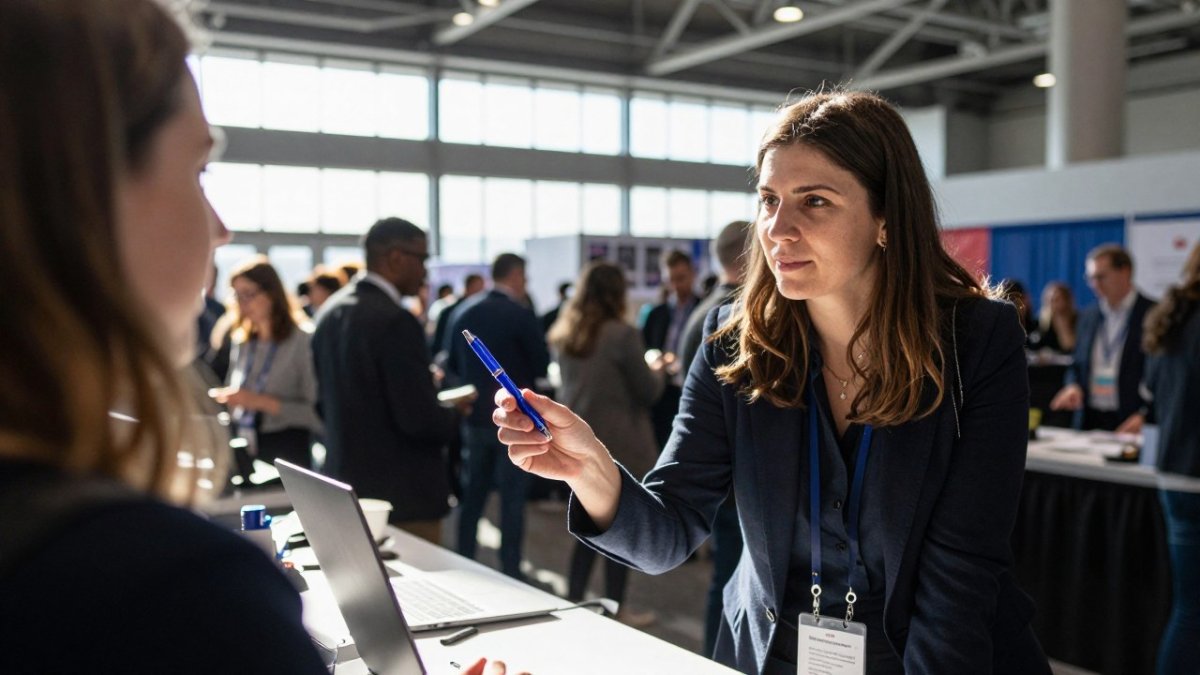
A trade show booth is a branded physical space where exhibitors meet buyers face to face, and it does not need a five-figure build to pull a crowd. The booths that draw traffic tend to be clear, open, and staffed by someone who looks approachable.
Below, we break down five low budget trade show booth ideas, plus the line items most budgets forget: shipping, storage, setup labor, and lead measurement. Costs depend on quantity, size, finish, and delivery, so check BicClic.com for current prices or a quote.
| Idea | Typical Cost Range | Reusable? | Best For |
|---|---|---|---|
| Portable pop-up backdrop | $300-$600 for a standard 10-foot backdrop | Yes | First-time exhibitors |
| DIY decor and signage | Under $150 in materials | Partly | Tight budgets, local shows |
| 10x10 open layout | $60-$500 depending on display finish | Yes | Small spaces |
| Engagement without tech | Under $100 in supplies | Yes | Crowd attraction |
| Inexpensive giveaways | Varies by quantity | No | Lead capture |
Idea 1: The Portable Pop-Up Backdrop Booth
The portable pop-up backdrop is the single best value in budget booth design. A fabric pop-up display gives you a full branded wall, packs into a carry bag, and sets up in minutes without tools. Showfire Displays' budget booth guide puts a standard 10-foot pop-up backdrop in the $300-$600 range, and EC Exhibits' breakdown of booth costs notes that basic fabric displays start lower while premium pop-up designs with professional graphics reach the $500 mark.
What It Costs
Budget for the display itself, then add graphics. Plain frames with printed covers cost less, while custom graphics, stabilizing bases, and wheeled cases add to the total. Shipping is a separate line, and a backdrop that ships in one bag saves you freight on every show.
Where It Works Best
Backdrop booths suit first-time exhibitors and anyone doing several regional shows a year. The same wall works at every event, which spreads the cost across your calendar. Watch out: order graphics early. Reprints after a proofing mistake are the most common budget blowout we see.
Idea 2: DIY Trade Show Booth Ideas That Cut Costs Without Looking Cheap
DIY trade show booth ideas work when the finish is consistent, not when the materials are simply cheap. Pick one accent color, repeat it on your backdrop, table cover, and signage, and the booth reads as designed rather than improvised.
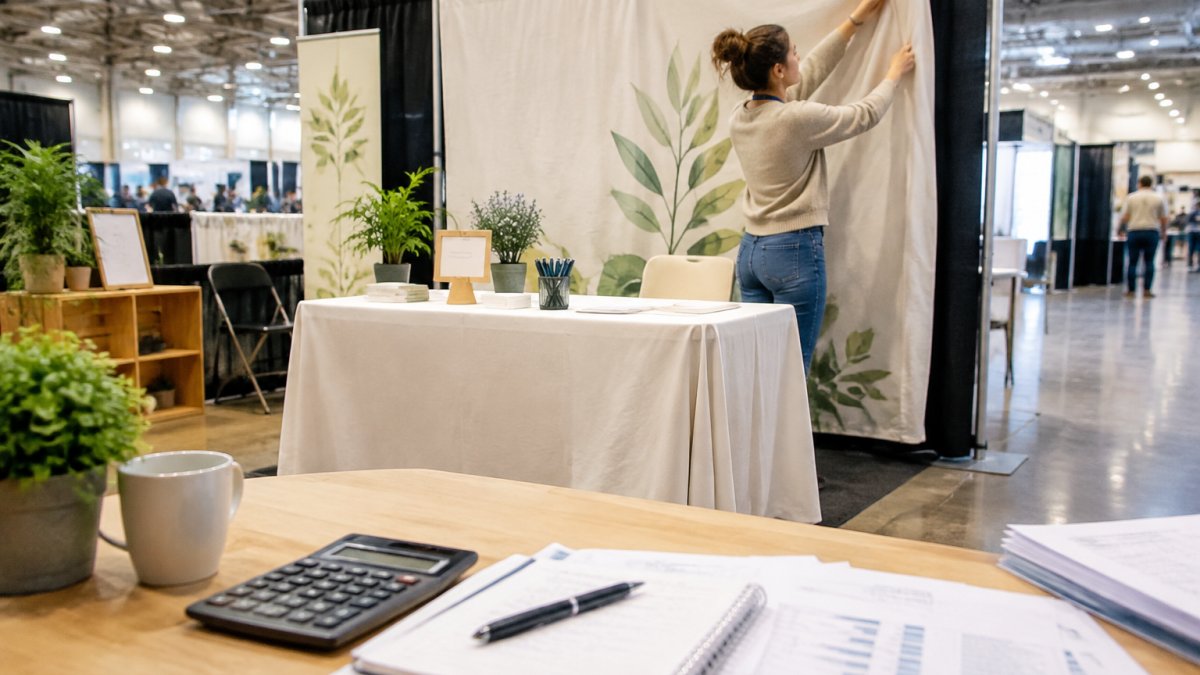
A few moves that cost little and look deliberate:
- Print a table wrap instead of renting furniture
- Use potted plants or a small rug to soften the floor
- Bring battery-powered lighting for darker halls
- Keep one clear focal point, not five competing signs
A common mistake is covering every surface in text. One bold message beats a wall of bullet points.
What DIY Actually Costs
A DIY booth can keep material costs low if you already own basic tools. Here is an example itemized range for a 10' x 10' space:
| Item | Typical Cost | Notes |
|---|---|---|
| Printed table wrap (fabric or vinyl) | $40-$80 | Reusable across shows; order early to avoid rush fees |
| Potted plants or small rug | $15-$40 | Local home goods store; plants double as giveaway props |
| Battery-powered lighting (2-3 fixtures) | $20-$45 | Check venue rules on open flame and power cords |
| Handwritten or printed signage | $10-$30 | High-contrast type; avoid glossy finishes that glare |
| Adhesive hooks and mounting putty | $5-$15 | Removable options protect rented furniture |
Typical Cost
The trade-off is time: DIY saves cash but costs setup hours, and a sloppy install reads as cheap. Watch out: venue rules often prohibit adhesives on walls or ceilings, so confirm what you can attach and where before you pack the putty.
Where DIY Works Best and Where It Fails
DIY decor suits local and regional shows where attendees expect a hands-on, owner-operated feel. It works less well at large national events where neighboring booths have professional builds and your table wrap competes with backlit displays. For businesses with a strong brand color and simple message, a DIY finish can achieve a clean visual impact. For companies selling premium services, the same DIY finish can undercut credibility.
Idea 3: 10x10 Trade Show Booth Design Ideas for Small Spaces
The strongest 10x10 trade show booth design ideas share one trait: an open layout. Pull the table to the side or the back corner, leave the front of the booth clear, and let attendees walk in. A closed U-shape with a table across the front signals "staff only" and kills booth traffic.
Space planning matters more than decor in a small booth. Keep your product demonstration at eye level, put storage under the table, and reserve floor space for two visitors at once.
A Concrete 10' x 10' Layout That Works
A simple L-shaped arrangement can work well in a small booth. Place a 6-foot table along the back wall or side wall, leaving the front and one side open. Add a small round cocktail table (24-30 inches in diameter) near the aisle for quick conversations. This gives you three zones: a greeting spot at the aisle, a demo area at the table, and storage underneath. Keep the center of the booth clear so two visitors can stand side by side without blocking the aisle.
| Zone | Placement | Purpose |
|---|---|---|
| Greeting | Front corner, aisle-facing | Staffer stands here, not behind furniture |
| Demo | Back or side table | Product at eye level, hands-on |
| Storage | Under table, lidded bins | Bags, giveaways, personal items |
| Conversation | Small cocktail table | Short chats, lead capture |
Accessibility and Inclusive Design
Accessibility is a practical traffic strategy, not a compliance afterthought. Leave a clear path at least 36 inches wide through the booth, keep counters at 28-34 inches so seated visitors can reach them, and print signage in large, high-contrast type with a minimum 24-point font for headlines. Avoid loose rugs or cords that create trip hazards. Placing giveaways at the aisle edge helps visitors who use mobility devices reach them without entering the booth.
Trade-Offs by Business Type
An open layout suits service businesses, software demos, and consultancies that need conversation space. Product sellers with many SKUs may need a taller shelving unit along the back wall, which eats floor space but displays more inventory. Staffing matters too: a two-person booth can manage an open layout, while a solo exhibitor may prefer a corner table that keeps them near the aisle without leaving the booth unattended.
Idea 4: Trade Show Booth Ideas to Attract Visitors Without Expensive Tech
The best trade show booth ideas to attract visitors rarely involve screens. A simple game, a live product demonstration, or a well-placed giveaway stops foot traffic just as reliably as a rented display. Square Signs' booth idea collection notes that projector and large-screen setups can run $500-$1,000 per unit per show, which is hard to justify on a tight budget.
Try these instead:
- A spin-to-win wheel with small prizes
- A short, timed product demo every hour
- A "guess the number" jar for lead capture
- A photo spot with your logo in the background
Each one gives attendees a reason to stop, and each one costs far less than a digital activation.
Idea 5: Inexpensive Trade Show Giveaways That Actually Get Kept
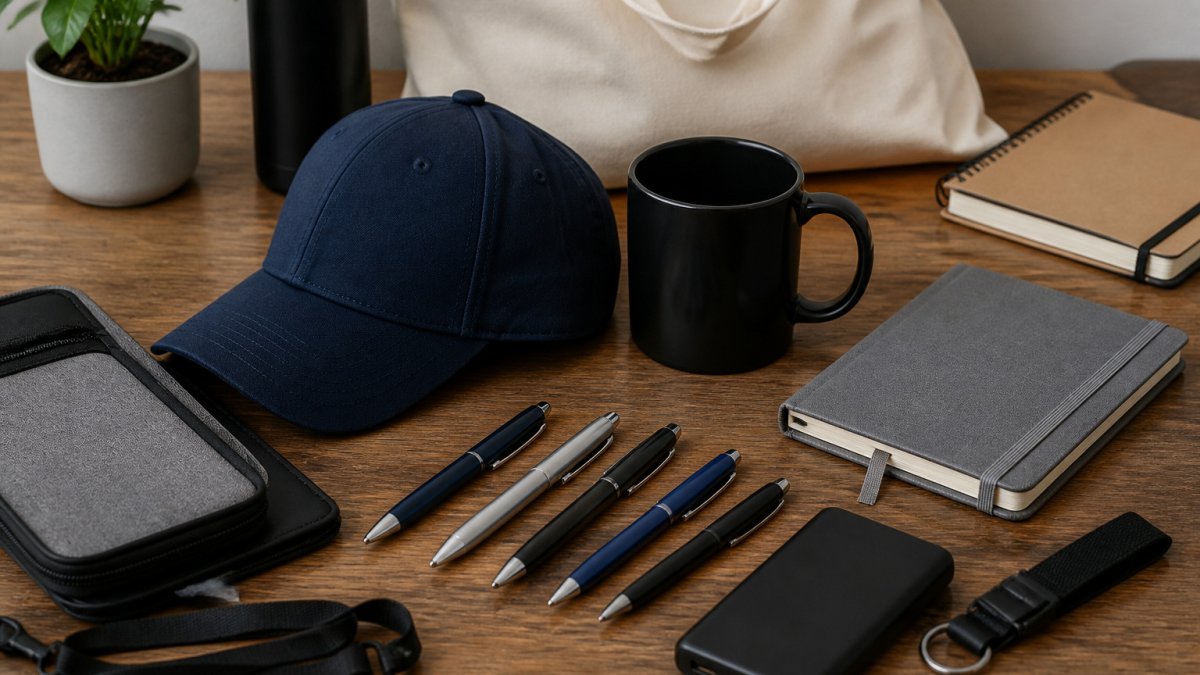
Inexpensive trade show giveaways earn their cost when they survive the trip home. Custom imprinted pens, drinkware, and stationery are items people often use daily, which can keep your brand in front of the buyer after the show.
Quality matters: a pen that skips or a tumbler that leaks can reflect poorly on your brand. For a wider list of products, see our guide to promotional items for small business marketing, and if you are worried about finish and durability, read how to ensure promotional product quality before you order.
How to Budget for Your Booth: Itemized Costs Beyond the Display
The display is rarely the biggest line in a booth budget. Shipping, storage, setup labor, and drayage fees often surprise first-time exhibitors, so price them before you commit to a build. Ordering early can help avoid rush fees.
| Cost Line | What to Plan For | Money Saver |
|---|---|---|
| Display and graphics | Pop-up backdrop or fabric display | Reusable modular components |
| Shipping and drayage | Round-trip freight to each venue | Ship in one case, book early |
| Storage | Off-season space for the display | Choose collapsible components |
| Setup and labor | Install time, or union labor at some venues | Portable designs you set up yourself |
| Giveaways | Pens, drinkware, stationery | Order in larger quantities |
| Lead capture | Scanner rental or paper forms | Simple forms and a follow-up plan |
Reusable and modular components can spread their cost across several shows. Lightweight materials can reduce freight weight, which can lower shipping costs.
Measuring Cost per Lead and ROI for Each Idea
Cost per lead is total booth spend divided by qualified leads collected, and it is the number that tells you which idea earned its place.
Track each idea separately. Give every giveaway and every signup source its own code or question so you can attribute leads correctly. Run the math after each show, keep what works, and drop what does not.
The exhibitors who win on a small budget are the ones who plan the whole cost picture, not just the display.
Frequently Asked Questions
How can I make my trade show booth stand out on a budget?
Focus on one bold visual element, like a fabric pop-up backdrop or a bright table wrap, rather than scattering your budget across many small items. Use an open layout so visitors can step in, and add a simple interactive element such as a giveaway drawing or a product demo. Keep your brand message clear and avoid clutter. Even a 10x10 booth can stand out with cohesive colors, good lighting, and a friendly, approachable team.
What are some inexpensive trade show giveaways that people actually keep?
Promotional pens, branded drinkware, and small stationery items tend to get kept because they are useful. Affordable swag tends to work best when it has strong visual impact and ties to your brand. Order in bulk to lower unit costs, and choose items that match your audience. A custom imprinted pen from BicClic.com, for example, can stay on desks and keep your name in front of clients after the show.
How do I decorate a 10x10 trade show booth without spending a lot?
Start with a reusable backdrop, such as a tension fabric display. Pricing depends on size, graphics, and accessories, so check BicClic.com or the supplier for current prices. Add a branded table throw and a few potted plants or rented furniture for warmth. Use DIY elements like a handwritten chalkboard sign or a photo wall. Keep the layout open and avoid covering every inch. Reuse the same decorations at multiple events to lower your cost per show.
Can I build a trade show booth myself?
Yes, many budget-friendly booths can be assembled by your team without professional help. Portable pop-up displays and fabric backdrops often set up in minutes with simple frames. DIY decor like painted crates, printed banners, and borrowed furniture can fill out the space. However, check the venue's rules on hanging signs, electrical work, and fire safety. If you need custom carpentry or large structures, hiring a professional may be safer and more cost-effective.
How can I reuse trade show booth materials to save money?
Choose modular displays with replaceable graphics so you can update your message without buying a new frame. Store your backdrop, table throw, and signage carefully to avoid damage. Plan purchases for use at more than one event. Reusing materials lowers your cost per show and reduces waste. Keep an inventory list so you know what you have before buying anything new.