 blog
Promotional Pens vs Custom Drinkware for Trade Shows
Last Updated: November 15, 2026
Quick Summary
Promotional pens win for high-volume trade show traffic because they cost less per unit, ship flat, and travel home in a pocket, while custom drinkware wins for qualified, high-value prospects who will keep a mug or bottle in view at a desk. Build a hybrid mix and compare cost per qualified lead rather than unit price.
- Pens ship flat and fit a pocket, while drinkware is bulky and adds freight cost.
- Cost per qualified lead is the number that matters, not unit price.
- Tag each giveaway SKU with a unique booth code to track which item leads received.
- Give pens to general traffic and reserve drinkware for demos or booked meetings.
- BicClic.com has served businesses across North America for over 14 years.
Table of Contents
- Why the Pens vs Drinkware Decision Shapes Your Booth Results
- Pens vs Drinkware: A Side-by-Side Comparison
- The Best Promotional Pens for Trade Shows: Styles, Materials, and Features
- Custom Drinkware: Mugs, Water Bottles, and When They Win
- How Trade Show Giveaway ROI Actually Works
- Promotional Product Budget Planning by Audience and Event
- Shipping, Storage, and Attendee Carryability
- Build Your Giveaway Mix With BicClic.com
- Frequently Asked Questions
Why the Pens vs Drinkware Decision Shapes Your Booth Results
The promotional pens vs custom drinkware for trade shows decision comes down to one question: which item gets used after the show floor clears? At BicClic.com, we supply custom imprinted pens and drinkware to North American businesses. Pens leave the building.
That matters because a giveaway only works when it stays visible. A pen clipped to a lanyard or dropped in a bag travels home with the attendee. A heavy tumbler might get left in a hotel room.
Below, we break down costs, recall, and logistics so you can build a giveaway mix that earns its place in the booth budget.
Pens vs Drinkware: A Side-by-Side Comparison
Pens win on cost per item and portability. Drinkware wins on perceived value and desk longevity. The longer version depends on how you measure return, and the only fair way to compare the two is to translate unit price into cost per impression and cost per qualified lead.
| Factor | Promotional Pens | Custom Drinkware |
|---|---|---|
| Typical unit cost | Lower, scales well in bulk | Higher upfront |
| Cost per impression | Very low over time | Low but higher entry cost |
| Portability | Fits a pocket or lanyard | Bulky, needs a bag |
| Everyday use | Daily, in office and field | Daily, at desk or gym |
| Perceived value | Modest | Higher, feels like a gift |
| Best for | High-volume booth traffic | Qualified, high-value prospects |
| Breakage and loss risk | Low; easily replaced | Higher; caps, lids, and dents |
| Shipping profile | Flat, light, low freight | Bulky, heavy, higher freight |
Cost Per Item and Cost Per Impression
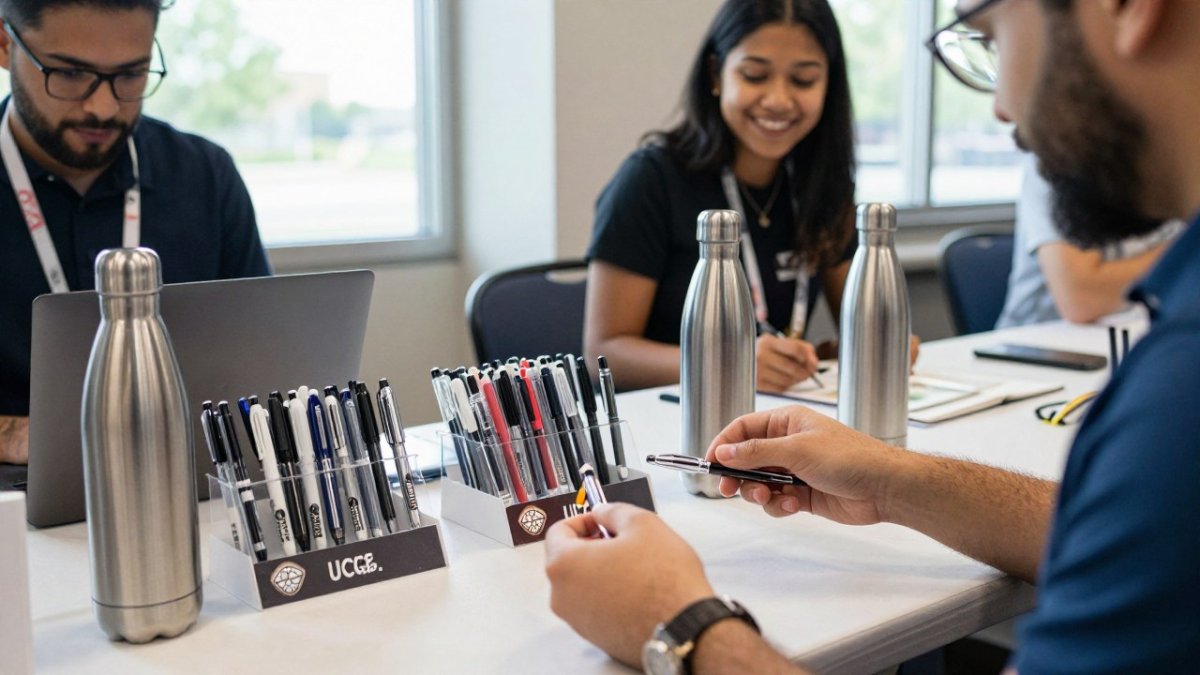
Cost per impression is the price of the item divided by how many times someone sees your logo. A pen that sits on a reception desk for a year racks up impressions far beyond its purchase price. Drinkware does the same, but the higher unit cost means you need longer use to break even on each impression.
A common pattern is to model three usage scenarios before you order: a pen kept in a pocket and used daily, a pen dropped in a drawer and forgotten, and a bottle or mug kept on a desk for a year. The first and third scenarios justify the spend; the second does not. Run the same three scenarios for drinkware, and the math usually favors pens for volume and drinkware for recipients who will actually keep the item in view.
The math favors pens for volume. It favors drinkware when the recipient is a decision-maker who keeps the item in view during work hours. Track both, and let the numbers settle the argument.
Everyday Use and Brand Recall
Brand recall is where the two categories diverge most. Pens get handled constantly, which keeps your logo in motion. Drinkware gets looked at during breaks and meetings, which keeps your logo in a fixed, visible spot.
Unaided recall, where a buyer names your company without a prompt, tends to follow whichever item the recipient actually kept. A pen in a drawer does nothing. A bottle on a desk does more.
A useful mechanism is to ask what the recipient does next. If they walk the floor, take notes, and fill out a badge scan, a pen earns its place.
Audience Fit and Event Type
The comparison changes by audience. General traffic at a large expo rewards low unit cost and easy carryability, so pens lead. A smaller seminar or executive briefing rewards quality and desk presence, so drinkware earns its cost. For small-business budgets, our roundup of the best promotional items for small business marketing covers which items stretch furthest.
Watch out: a flimsy pen with a smeared logo does more damage than no pen at all, and a leaking bottle does the same. Verify imprint quality and lid seals on samples before you commit to a bulk order.
The Best Promotional Pens for Trade Shows: Styles, Materials, and Features
The best promotional pens for trade shows are the ones people reach for without thinking: a comfortable grip, smooth ink flow, and a design that survives a bag. A metal retractable pen with a stylus tip is one style worth considering for many booths, because it works on paper and on a tablet.
Here is how the main styles stack up:
- Classic stick pens: Cheapest per unit, ideal for high-traffic booths and bulk handouts.
- Retractable metal pens: Feel substantial, hold up in daily use, and suit premium prospects.
- Stylus pens: Useful for anyone working on touchscreens, a practical everyday item.
- Pen kits and gift sets: Best for VIP follow-ups and dealer incentives.
Material choice matters, and metal pens generally carry more perceived value than plastic. If you are unsure how to check samples, our guide on how to ensure promotional product quality walks through what to inspect.
Custom Drinkware: Mugs, Water Bottles, and When They Win
Custom drinkware can suit an audience that is small, qualified, and likely to sit at a desk. A branded mug or water bottle can feel more like a gift than a handout.
Water bottles travel to gyms and commutes. Mugs stay in the office kitchen. Both keep your logo in a fixed spot for months, and both carry a higher perceived value than a pen.
For employee welcome kits and client appreciation, drinkware often beats pens outright. If that is your use case, our guide on how to choose branded drinkware for employee welcome kits covers styles and sizing in more depth.
One honest limitation: drinkware is a poor fit for a booth with heavy foot traffic and no bag check. Most attendees will not haul a mug across a convention floor.
How Trade Show Giveaway ROI Actually Works
Trade show giveaway ROI is generally measured as the value of leads and sales attributed to a giveaway, divided by what the items cost. The catch is attribution. Most teams count booth scans and stop there, which hides whether the giveaway did any work.
A workable measurement plan looks like this:
- Tag each giveaway SKU with a unique booth code or landing page.
- Separate high-intent scans from casual walk-bys at the booth.
- Follow up within a week and log which item the prospect received.
- Compare cost per qualified lead across pen and drinkware groups.
Cost per qualified lead is the number that matters. A cheap pen handed to 500 people can cost more per qualified prospect than a pricier bottle given to 50 decision-makers. Run both in small batches before committing your full budget.
Cost Per Impression and Cost Per Qualified Lead
Most buyers stop at unit price, which is the least useful number in the comparison. The two numbers that actually settle pens versus drinkware are cost per impression and cost per qualified lead.
Cost per impression is the item price divided by the number of times your logo is seen. A pen used daily for a year generates far more impressions than its purchase price suggests.
Cost per qualified lead is the item cost divided by the number of qualified leads the giveaway produced. This is where the comparison gets honest.
A Simple Test Before You Commit
Run both items in small batches at two similar events. Give pens to general traffic and reserve drinkware for attendees who complete a demo or book a meeting. Tag each SKU with its own booth code, follow up within a week, and log which item each qualified lead received.
Watch out: attribution breaks when every giveaway shares one landing page. If you cannot tell which item a lead received, you cannot compare cost per qualified lead, and the test tells you nothing.
Promotional Product Budget Planning by Audience and Event
Promotional product budget planning starts with the audience, not the catalog. Split your spend into three tiers and assign items accordingly.
- Tier 1, general traffic: economical giveaways like classic pens for everyone who stops.
- Tier 2, engaged prospects: better pens or small drinkware for attendees who complete a demo or scan.
- Tier 3, high-value prospects: premium drinkware or pen kits for scheduled meetings and follow-ups.
Event type shifts the mix too. A large expo rewards volume, so pens lead. A smaller seminar or executive briefing rewards quality, so drinkware earns its cost. For small-business budgets, our roundup of the best promotional items for small business marketing covers which items stretch furthest.
Build a hybrid mix rather than picking one side. Test a pen-forward booth against a drinkware-forward booth at two similar events, then scale the winner.
Shipping, Storage, and Attendee Carryability
Logistics decide more giveaways than most planners expect. Pens ship flat, store in a single box, and fit in a pocket.
Carryability is the hidden factor. Attendees walking a convention floor for hours will not hold a heavy item. If you plan to give drinkware, offer a bag or hold it for scheduled meetings.
Watch out: ordering drinkware late in the cycle often means paying expedited freight or settling for a style you did not want. Place bulk orders early and confirm the delivery window in writing.
Build Your Giveaway Mix With BicClic.com
The right giveaway mix pairs a high-volume pen with a targeted drinkware piece, then measures cost per qualified lead to see which one earns its budget.
BicClic.com offers genuine Bic brand products, custom imprinted pens and promotional items, and has served businesses across North America for over 14 years.
Visit BicClic.com to get started on your next trade show giveaway.
A trade show booth is a crowded place, and the item you hand out has seconds to earn a second look. Choose a partner who can deliver quality imprinted products on schedule.
Frequently Asked Questions
Are promotional pens still effective for trade shows?
Yes, when they are chosen for daily use rather than novelty. Pens get picked up, clipped to lanyards, and carried into offices, so a logo stays in front of prospects long after the event. The key is quality: a pen that writes smoothly and feels solid is kept, while a flimsy one is discarded. Choosing branded pens with a clear imprint and a comfortable grip gives you the best chance of repeat exposure.
Do custom pens provide better ROI than branded drinkware?
It depends on your goal and audience. Pens cost less per unit, so they stretch a tight budget across more attendees and generate more total brand impressions. Drinkware costs more per item but often delivers higher perceived value and longer individual use, which suits high-value prospects and smaller, targeted lists. Many exhibitors split the budget: pens for the general booth traffic and custom drinkware for lead-capture incentives or VIP follow-ups. Track which item converts to meetings before committing to a single format.
How do I choose the best promotional items for my target audience?
Start with what your audience does daily. Office-based prospects use pens constantly, so a branded pen gets seen at desks and in meetings. Field staff, gym-goers, and commuters carry water bottles. Consider the event too: a summer expo favors drinkware, while a conference with heavy note-taking favors pens. Match the item to the prospect's role and the setting, then confirm quality reflects your brand image. A short pre-event survey or past attendee feedback can settle the choice quickly.
What are the shipping and storage considerations for trade show swag?
Order early enough to allow for production and shipping, since rush orders and tight lead times raise costs and risk missed deadlines. Pens ship compactly and store easily in a closet or storage room; drinkware takes far more space and weight, which matters for booth setup and leftover inventory. Check whether the venue accepts advance shipments and where you can store empty boxes. Also think about attendee carryability: a heavy bottle is harder to carry around a hall than a pen, so offer bags or plan for drop-off.